What Is Flight Forming? How Auger Flighting Gets Its Shape
An auger’s flighting must do more than fit around a shaft. It must have the diameter, pitch and configuration specified for the equipment and process. Flight forming is the manufacturing step that gives the material its helical shape before it moves into final fit-up and assembly. At Falcon Industries, forming is part of a manufacturing process that also includes machining, welding and quality checks.
Falcon manufactures custom helicoid, sectional, ribbon and shaftless flighting in-house. It also distributes FLITECH® helicoid and cone-rolled products, providing another sourcing option when the application does not require extensive customization.
Understanding how these products are formed helps equipment manufacturers and fabrication teams specify the flighting they need and understand which manufacturing options suit their design.
What Does Flight Forming Mean?
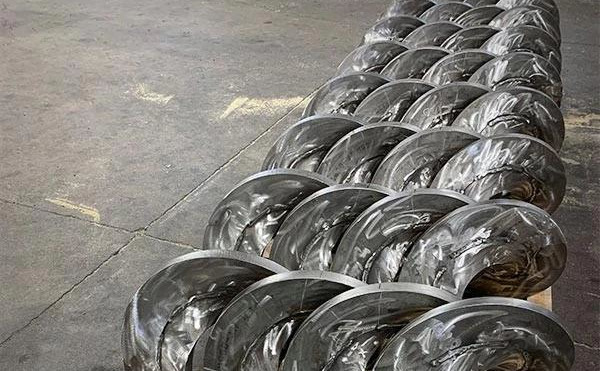
Flight forming turns stock material or a cut blank into a helical flight. Depending on the construction, the result may be a continuous length of flighting or an individual turn or segment that will be joined with other sections. Falcon’s helicoid flights are formed as continuous helices, while its sectional flights are formed from individual blanks using presses.
Forming is distinct from cutting and assembly. Cutting establishes the blank’s profile and features; forming gives it its helical geometry. Assembly involves fitting the formed flighting to a shaft, pipe or tube and completing the required fabrication.
Several dimensions help define the finished flight:
- Outside diameter, or OD.
- Inside diameter, or ID.
- Pitch.
- Flight thickness.
- Flight height, or web.
These specifications influence both how the flight is manufactured and how it fits into the completed screw. Falcon checks ID, OD, pitch and alignment throughout production, whether supplying flighting alone or a complete assembly.
How Falcon Forms Custom Helicoid Flighting
Helicoid flighting is a continuous, one-piece helix. Falcon manufactures it from square or rectangular bar stock, round bar or cut plate using its in-house equipment and forming methods.
During forming, metal flow produces a thickness profile that tapers from the inside diameter to the outside diameter. Falcon’s custom equipment and methods allow it to produce thicker outside edges and tighter tolerances than traditional flights.
Continuous construction also reduces the number of splices required compared with assembling a helix from individual sectional flights. That distinction can influence the amount of joining and welding needed during screw fabrication.
Custom Geometry Starts with the Specification
Falcon manufactures helicoid flighting to customers’ requirements and designs. Its published capabilities include diameters up to 36 inches, using flat bar up to 1½ inches thick and 6 inches wide, or round bar up to 2½ inches in diameter.
These figures describe different aspects of the manufacturing range—not a guarantee that every maximum can be combined in one flight. The proposed material and geometry should be reviewed together when requesting a quote.
How Falcon Forms Custom Sectional Flighting
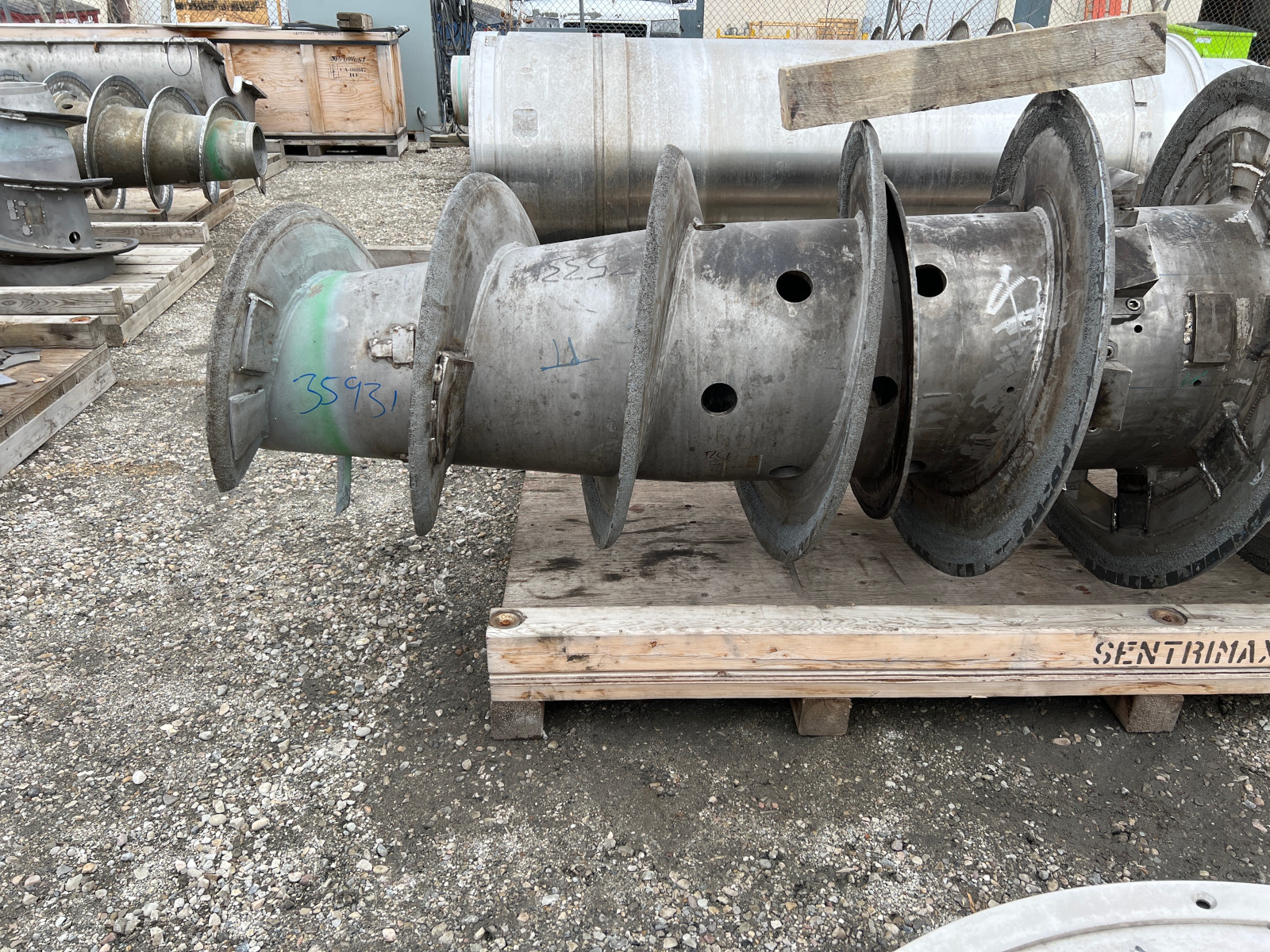
Sectional flights are individual turns, wraps or wrap segments formed into a helix. Falcon uses a range of press sizes and styles to manufacture these components. Unlike helicoid flighting’s tapered thickness profile, sectional flights have a uniform cross-sectional thickness from OD to ID.
The process begins with a flight blank. Falcon can program its plasma equipment to cut blanks with a tapered OD, tapered ID or other custom features. Those blanks are then formed into the required helical segments.
Sectional construction gives Falcon flexibility to manufacture larger webs, custom shapes and mounting features. Available features include integral spokes, cut-and-folded configurations, sawtooth edges and bolt holes for teeth or wear shoes.
Individual sections can subsequently be joined into a continuous helix or incorporated into a complete auger screw. Forming creates the flight geometry; joining and attachment to the center member are separate fabrication operations.
Material Formability Matters
Falcon’s published sectional capabilities range from 1½ inches to 148 inches in diameter, with thicknesses up through 1½ inches. Achievable dimensions depend on the formability of the base material, and some designs may require multi-piece sections or alternative material options.
That makes material selection part of the manufacturing discussion—not simply a specification added after the geometry is finalized.
Where Ribbon and Shaftless Flighting Fit
Ribbon and shaftless flighting describe configurations with open-center geometry. They should not automatically be treated as separate forming methods.
Falcon describes ribbon flighting as a large-diameter helix formed from bar stock or cut plate, with a larger ID and narrower web. Its shaftless flighting uses heavier-gauge helicoid flights with an open center. Falcon manufactures both configurations in-house.
This distinction helps buyers separate the flight’s configuration from the manufacturing method used to produce it.
Why the Forming Method Matters
The forming method affects the geometry and construction available to the customer. It also influences how the flighting moves into fit-up and assembly. The objective is not to choose one method as universally better, but to manufacture the specified flight in a way that suits its material, dimensions, and construction requirements.
Thickness Profile
Helicoid flighting tapers in thickness from ID to OD, while sectional flighting maintains uniform cross-sectional thickness. These are differences in construction that should be considered when specifying the flight.
Web Height and Custom Features
Sectional forming can accommodate flight webs beyond what can be produced from flat bar in helicoid flighting. Cut blanks also give Falcon options for tapered profiles, mounting holes and other custom features.
Joining and Assembly
Continuous helicoid flighting requires fewer splices than a comparable helix assembled from individual sectional flights. Sectional construction, meanwhile, allows individual sections to be manufactured and, where appropriate, replaced.
Dimensional Accuracy and Fit-Up
A formed flight must match the component it will attach to. Falcon uses fixtures and alignment tools to check ID and pitch and verify flight sections against the shaft or pipe before assembly. Its quality checks also address OD, alignment between sections and customer-supplied mating components.
From Formed Flighting to a Complete Auger Screw
Falcon’s in-house capabilities allow customers to order formed flighting for their own fabrication work or a complete auger screw assembly. The same attention to dimensions and fit-up applies to both options.
For a complete build, Falcon manages flight forming, machining, welding, and final assembly. Knowing whether the flighting will attach to a shaft, pipe or tube is an important starting point because that interface determines the required fit and primary dimensions.
Customers can provide drawings, specifications, or existing components for review. When mating parts are available, Falcon can use them for direct test-fitting rather than relying solely on dimensional estimates.
Discuss Your Flighting or Auger Screw Requirements
Whether your design calls for continuous helicoid flighting, custom sectional segments, ribbon or shaftless configurations, Falcon can review the manufacturing requirements and discuss the appropriate supply scope. For applications requiring limited customization, its distributed FLITECH product line provides an additional option.
Share your drawings, material specifications, dimensions and assembly requirements with Falcon Industries to discuss formed flighting or a complete auger screw.
Explore Falcon’s custom auger screw manufacturing and assembly capabilities and request a quote.